
Do you ever wonder why your dentist recommends regular professional teeth cleaning in Issaquah? That’s because plaque can begin turning into stubborn tartar faster than you think. Plaque constantly forms in your mouth; if it isn’t removed in time, it can harden into tartar, which can’t be brushed away. Plaque is the main cause of cavities, while tartar traps bacteria against your gums, raising your risk of gum disease and, over time, tooth loss. Understanding how plaque turns into tartar can help you stop the cycle before it causes serious damage.
Key Takeaways

Plaque is a soft, sticky film of bacteria that forms on your teeth throughout the day. When you eat, those bacteria feed on sugars and starches and produce acids that weaken enamel.
If plaque isn’t removed through daily brushing and flossing, it grows thicker and spreads along the gumline and between teeth. This buildup increases the risk of cavities and irritates gums, leading to inflammation.
Tartar, also called calculus, is plaque that has hardened after absorbing minerals from your saliva. It forms a rough, yellow or brown crust that bonds tightly to your teeth, both above and below the gumline. Because it’s so firmly attached, brushing and flossing can’t remove it.
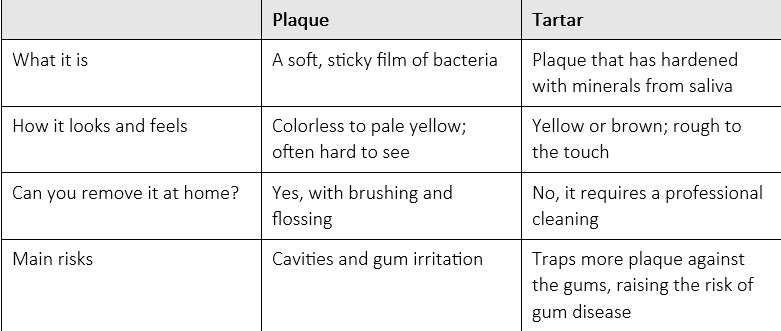
Plaque doesn’t take long to start turning into tartar—sometimes within just a day or two. This process happens in stages, and understanding each step can help you take action before it leads to serious dental issues.
Plaque starts to build up on your teeth within hours of brushing. Every time you eat or drink, especially sugary or starchy foods, the bacteria in plaque feed on the leftovers and produce acids. These acids weaken enamel, and the bacteria can begin irritating your gums.
If plaque isn’t removed through brushing and flossing, it spreads. It collects along the gumline and between teeth, creating an ideal environment for bacteria to multiply. As the bacterial colonies grow, they release toxins that trigger inflammation, making gums red and sensitive.
Plaque that’s left in place can begin to harden within 24 to 72 hours as minerals from your saliva build up in it. This hardened deposit, also called calculus, clings tightly to tooth surfaces, forming a rough, yellow, or brown crust that can no longer be removed with a toothbrush.
Tartar forms most commonly around the gumline, trapping bacteria and making it difficult to clean teeth properly. As tartar accumulates, gums become inflamed, often leading to gingivitis—the earliest stage of gum disease.
If tartar isn’t professionally removed, it continues to build up below the gumline, causing gums to pull away from teeth. This creates deep pockets where bacteria thrive, leading to periodontitis. Over time, this can result in gum recession, bone loss, and even tooth loss. If you already have signs of advanced buildup, gum disease treatment can help bring your gums back to health.
Since tartar can’t be removed at home, professional cleanings are essential to stop this cycle.
Tartar isn’t always easy to spot, especially when it forms between teeth or below the gumline. Watch for these common signs:
If you notice any of these, it’s a good time to book a cleaning and exam.
Once plaque hardens into tartar, it bonds to your teeth so firmly that a toothbrush, floss, or mouthwash can’t break it loose. Dental hygienists remove it with specialized instruments designed to clean safely around the gums and below the gumline.
It may be tempting to try a metal scraper or pick sold online, but we strongly recommend against it. These tools can scratch your enamel, injure your gums, and even push tartar deeper below the gumline. Tartar-control toothpaste can help slow new buildup, but it won’t remove tartar that’s already there.
Your daily habits make a big difference in how much plaque has the chance to harden between visits. To keep buildup under control:
To prevent plaque from becoming a bigger problem, your daily habits matter more than you think. Learn what you should and shouldn’t do when cleaning your teeth at home to keep buildup under control between cleanings.
Everyone builds up some plaque, but certain factors can make tartar form faster, including:
Brushing and flossing help manage plaque, but once tartar forms, only a professional cleaning can remove it. Here’s what to expect during your visit:
A hygienist uses a scaler to remove plaque and tartar, especially around the gumline and between teeth. The more buildup, the longer this step takes.
A high-powered brush and gritty toothpaste remove surface stains and smooth your teeth, making it harder for plaque to stick.
A hygienist flosses between teeth to remove any remaining debris.
A rinse clears away loosened plaque, tartar, and toothpaste residue.
A fluoride gel or foam may be applied to strengthen enamel and protect against decay.
Routine professional cleanings not only brighten your smile but also can help reduce the risk of gum disease and costly dental procedures.

For many patients, a cleaning about every six months keeps tartar in check. Your dentist may recommend more frequent visits if you have a history of gum disease, build up tartar quickly, smoke, or have health conditions that affect your gums. The best schedule is the one your dentist recommends for your mouth.
Plaque is a soft, sticky film of bacteria that you can remove with brushing and flossing. Tartar is plaque that has hardened with minerals from saliva, and it can only be removed during a professional cleaning.
Plaque that isn’t removed can begin to harden into tartar within 24 to 72 hours. That’s why brushing and flossing every day is so important.
No. Tartar bonds tightly to your teeth and needs to be removed by a dental professional. Scraping at it yourself can damage your enamel and gums.
Brush twice a day with fluoride toothpaste, clean between your teeth daily, limit sugary snacks, and keep up with regular professional cleanings. A tartar-control toothpaste can also help slow new buildup.
For many patients, about every six months. If you’re at higher risk for gum disease or build up tartar quickly, your dentist may recommend more frequent cleanings.
Whether you need a routine cleaning or treatment for tartar-related gum issues, our teeth cleaning services can help keep your smile strong and healthy. Call us at 425-837-0383 or request an appointment online to take control of your oral health with expert care at APEX Dental Care.
.webp)


